
UI/UX Design Agency vs In House Team: What Scaling SaaS Startups Should Choose
Latest Update :August 20, 2026By :Rasangana Thaldena (Founder)
The question every scaling SaaS founder eventually faces
There is a specific, slightly uncomfortable moment in the life of every successful SaaS startup. You have done the hard part: you found product market fit. The usage charts are climbing, the user base is multiplying, and the servers are humming along. Then you look at your interface. That "founder designed" UI, hacked together at 2am somewhere around your seed round, is starting to look less like a scrappy origin story and more like a liability.
That is when the real question shows up, and it is bigger than it looks. Do you build a design team inside the company, or do you bring in a specialized outside partner? This is not a conversation about button styles. It is a decision about how your company produces its product going forward, and it carries real financial weight. You are not just choosing who designs your next screen. You are choosing the operating model your product will run on for the next two or three years.
UI/UX design agency vs in house team: the two models compared
The agency model. Think of an agency as a specialized outside team you bring in for speed and range. You pay a monthly retainer, commonly somewhere between $5,000 and $15,000, and in exchange you get a team that already has the tools, process, and talent in place. There is no hiring cycle, no benefits administration, no software licensing to manage on your end. You get output, on a schedule, without carrying the overhead.
The in house model. An internal team lives inside your company day to day. They absorb your product's history, your users' quirks, and the reasoning behind decisions made two years ago that nobody wrote down. That depth is valuable, but it is not cheap. A mid level product designer with a $110,000 base salary typically costs closer to $140,000 to $145,000 once you add healthcare, retirement contributions, equipment, and the software subscriptions needed to keep them productive. Industry estimates commonly put total cost of employment at 1.25 to 1.4 times base salary, so budget accordingly rather than anchoring on the salary number alone.
How we got here: a short history of SaaS design staffing
The way SaaS companies staff design has shifted in three fairly distinct waves over the last decade or so.
2010 to 2015, the polish era. Design was treated as a finishing touch. Startups brought in a boutique agency for a short engagement, cleaned up the landing page, picked a better font for the dashboard, and moved on.
2016 to 2021, the buildout era. Cheap capital and the "own your product DNA" philosophy pushed startups to build large internal design organizations. Headcount grew fast. Companies added not just designers but UX researchers, motion specialists, and design ops managers, often well before the product complexity justified the team size.
2022 to today, the efficiency era. As capital got more expensive, founders reassessed. Many realized they did not need a fifteen person design org to ship a strong product. They needed focused execution that did not eat into runway. The design function got unbundled into pieces companies could buy separately instead of building all at once.
The hybrid middle ground: fractional leadership and design as a service
Today the choice is not strictly binary. A middle layer has emerged that lets founders assemble something closer to what they actually need.
Fractional design leadership. Instead of hiring a full time Head of Design at $200,000 or more, founders can bring in an experienced design leader for a set number of hours a week. You get senior direction setting the strategy while a smaller, more junior team handles execution day to day.
Design as a service. Subscription based design studios, Designjoy is a well known example, charge a flat monthly fee, typically in the $5,000 to $8,000 range depending on the plan, for a defined volume of ongoing design requests. It is a genuine middle ground: agency level speed with software like billing predictability. The tradeoff is that these services are optimized for throughput, so founders should weigh consistent output against the risk of more generic, less deeply researched design decisions.
AI as a force multiplier. AI tools inside the design workflow, Figma's AI features are one example, are changing how much a single senior designer can produce. A skilled designer working with these tools can now cover ground that used to require two or three people, which changes the math on how lean a design function can realistically be.

Where agency and in house models actually clash
The tradeoffs here are real, not theoretical, and founders should go in with eyes open.
The perspective gap. In house teams can develop a kind of tunnel vision. Staring at the same product every day makes it harder to see where the interface has quietly accumulated friction. Agencies bring fresh eyes but sometimes miss the deeper functional context, producing something visually strong that does not hold up against the messy reality of a complex B2B workflow.
The consistency tradeoff. As more of the industry moves toward subscription style design delivery, there is a fair question about whether speed and volume come at the cost of deeper user research. Fast output is not automatically good output, and founders evaluating a DaaS provider should ask directly how research and testing fit into their process.
The handoff problem. Agencies can leave behind polished but poorly documented files that lock your team into their file structure or tooling. In house hires can build strong systems and then leave without documenting components properly, leaving engineering to reverse engineer the logic later. Either way, documentation should be a contractual requirement, not an afterthought.
What design staffing looks like by 2027
Gartner forecasts that by 2027, more than 30 percent of midsize enterprises will have at least one fractional executive on retainer, a signal that fractional leadership is moving from trend to standard practice across company types, design included.
The traditional UI designer role, focused on manually assembling layouts and components, is shifting toward something closer to an AI experience designer, someone who directs AI tooling, manages edge cases, and shapes personalized user flows rather than producing every screen by hand.
Pricing models are shifting too. Flat hourly billing is giving way to outcome based arrangements, where an agency's compensation is tied to metrics like activation or retention lift. It is a more direct alignment between what a design partner is paid and what the redesign actually delivers.
When to hire an in house designer vs an agency: a decision framework
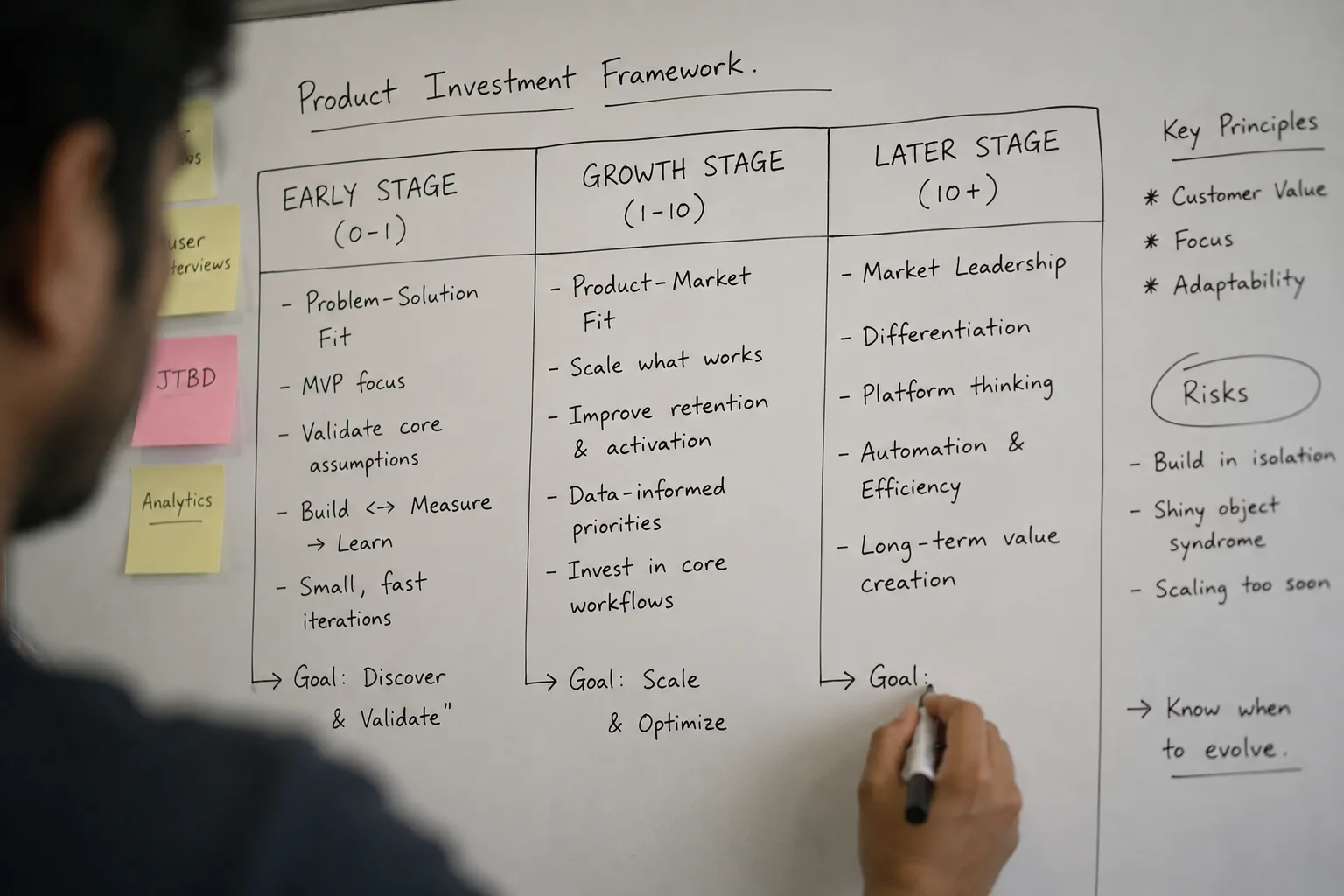
Strip away the noise and the decision usually comes down to your current stage.
Choose an agency if you are pre seed or seed stage, need to move fast on an MVP or a rebrand ahead of a fundraise, need a focused push toward a specific conversion metric, and cannot yet justify a $150,000-plus hire for a role you are not sure you need permanently.
Go in house if you are Series B or later, your product's design has become a genuine competitive differentiator, you need daily iteration grounded in proprietary usage data, and you have the budget and roadmap stability to invest in institutional design knowledge.
Go hybrid if you already have a junior or mid level internal team that is capable but lacks senior direction. Bringing in fractional leadership to set the strategy while your internal team executes is often the most capital efficient path for companies scaling past their first product version.
The bottom line
Your product's design is not a cosmetic layer. It is a direct expression of how your company thinks and operates, which means the staffing model behind it deserves the same scrutiny you would give any other strategic hire. Whether you rent that capability through an agency, build it in house, or blend the two, the right answer is whichever one actually matches what your product needs to become next, not whichever one looks best on a pitch deck.
If you are weighing this decision right now and want a second opinion on where your product actually sits on that maturity curve, that is a conversation worth having before you commit budget either way.

Enjoyed this? Let us help you build it.
Work with Us
Book a Strategy Call